Understanding wildfire threats is a harsh but increasingly normal reality for outdoor users. Evacuation complications are tenfold when horses and other animals are added to the equation.
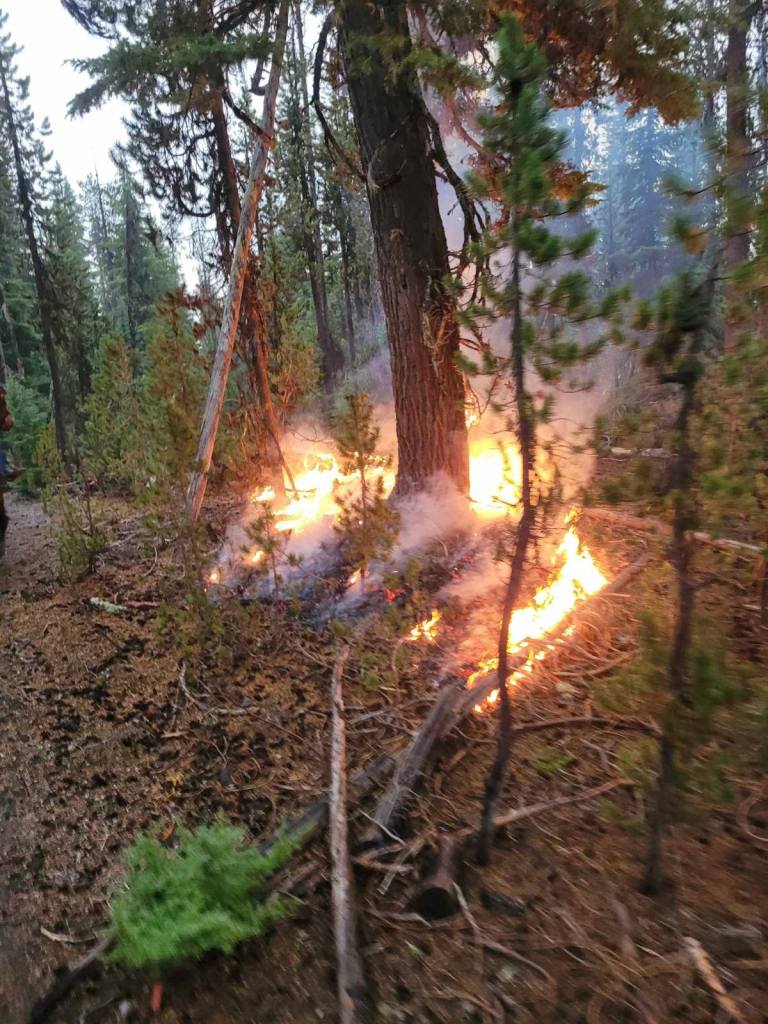
As a first responder for animal disasters, I have become rather hyper aware of wildfires. I’ve spent time behind the fire lines evacuating and sheltering animals from devastating fires- and during those times I have seen some of the most heartbreaking scenes in my career. Recently, we found ourselves camped at Quinn Meadows Horse Camp when conditions changed and resulting in a Level Three Evacuation of the camp. Being experienced backcountry riders- we knew how to monitor the nearby changing conditions and how to prep for a potential evacuation. Keep reading for my top 5 tips, and how we managed the fire dangers around us to keep everyone safe.
Monitoring Weather Conditions
Watch for official weather alerts regarding fire conditions. A red flag warning will be issued when there are high temperatures, low humidity, and strong winds. The combination of these causes an increased risk of fire danger. Additional factors such as a widely scattered “dry” thunderstorm, the first thunderstorm after a hot and dry period, a cold front with substantial winds without rain can also contribute to a red flag warning.
Avoiding areas under current red flag conditions is advised, but should you find yourself with these conditions building while camping or riding knowing weather, routes and terrain will be especially helpful.
Plan Ahead for Safe Exits
When fires are lurking nearby or red flag conditions are underway – you should know how to swiftly and safely exit your location should the road or trail be blocked.
Fires have been known to block roads with flames or cause hazardous trees over roads. Choosing a camp with multiple exits during the peak of fire season is preferred. Remote camps with no alternative route would be dangerous to consider if there are fires nearby.
If setting out on a trail – know your alternate routes. Are you riding into a canyon with only one way in and out? Are you riding an out-and-back trail through thick dry forest? Take into account your alternate route, a place of safety (above tree line, a lake, exit to a road) and the current weather conditions.
Know When to Leave
As a general rule – livestock owners should evacuate sooner than people without livestock. The complexity of loading and hauling horses as well as needing a safe trailer friendly route means we need more time. So while waiting for an official evacuation notice is one way to decide when to leave, you should also consider that even the incident management team of a fire may not be able to give any amount of notice. Don’t assume that you will be given a level one order before being upgraded to a level three (Go Now!). If conditions change, you may need to leave immediately.
For that reason- if you find yourself camping or packing with changing conditions you should at least prepare for a potential quick exit. Pack up unneeded items, make sure your trailer is hitched, halters in near the horses, and know where you will be heading if its not home. If you have other riders in your party that leave to ride – have a communication plan in place.
Digital Tools for Safety
Several phone apps exist that can help detect new fires, wind direction, evacuation zones and fire spread.
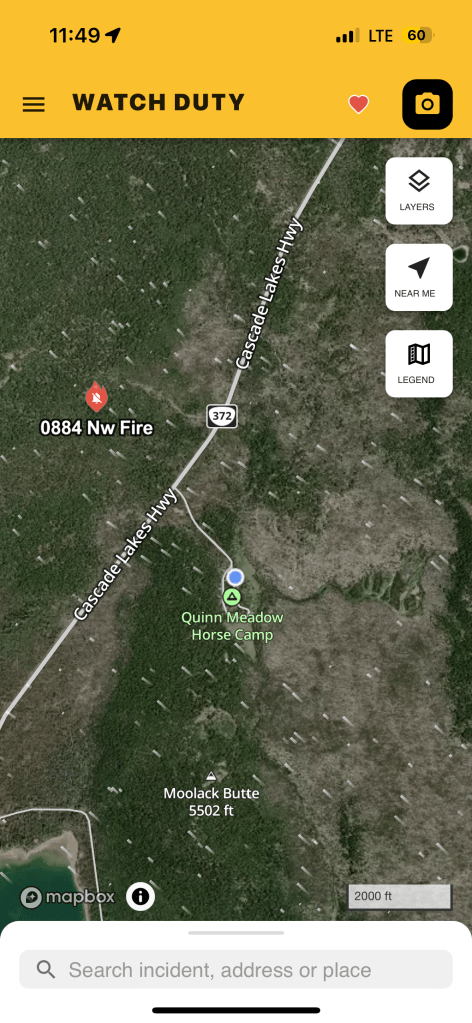
- Watch Duty – this app is a must-have for all recreational users. Useful for watching current fire lines, evacuation orders, official updates and identifying new fires near you.
- Windy – Understanding wind direction and speed can help you determine if the fire is currently posing a risk of heading towards you. In extreme weather conditions, you may see winds moving in all directions – this type of wind pattern increases the risks of tornadic fire behavior.
- Paku – this app will show you the air quality index near you, and by clicking on each dot, you can see if it’s trending downward or upwards.
Choosing a Campground or Trail
There are many camps and trails that have minimal to no cell service. If you’re camping, packing or riding during fire season its best to choose an area with good service so that you can be aware of changing conditions. However, if this is not an option – nominate a trust worthy friend to notify you of nearby fire danger and use a satellite device to keep in touch.
When the Bachelor Complex fires started at Quinn we took swift action to keep our group safe.
- Notified 911 of nearby fire found by riders.
- Monitored weather conditions for wind direction, humidity and rainfall.
- Packed up all non-essentials.
- Shared riding plans with multiple people to aid in quick communication if conditions changed.
- Kept cell phones and Garmin InReach’s charged for communication.
- Trailers hooked up and ready to move at any time.
- Took note of alternate exit route if needed.
- Evacuated camp early when nearby fire spread.
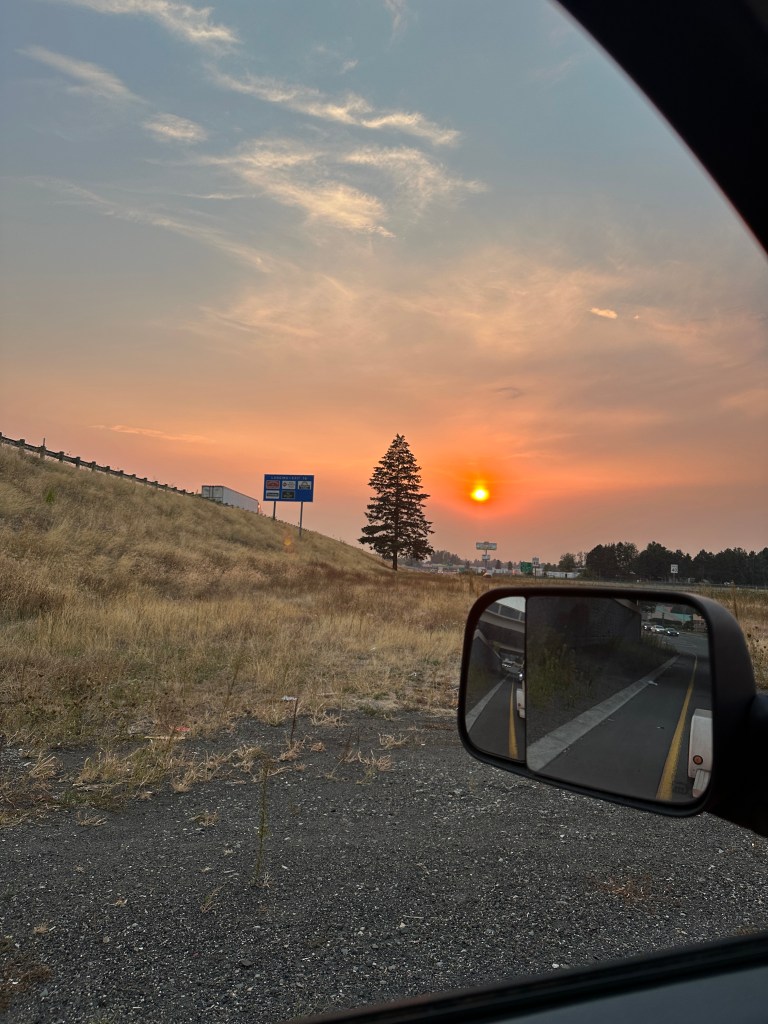
Camping during fire season can be an absolute pain, but with the right knowledge, preparedness and decision making you can have a safe camp trip with minimal stress. Choose your camps wisely and keep the weather conditions in mind. Lastly – consider canceling any trip with poor air quality – any AQI over 101 should cancel all riding. For equines exposed to smoke during evacuation or otherwise – consdult with your vet, refer to OSU’s guidelines for returning horses to work post wildfire exposure and UC Davis’ protocol for wildfire exposure.
Additional Info:
- Oregon State University: Return to Work Post Wildfire Exposure
- UC Davis: Smoke Inhalation Treatment Guidelines
 Moquistang; one little mustang who does it all.
Leave a comment